
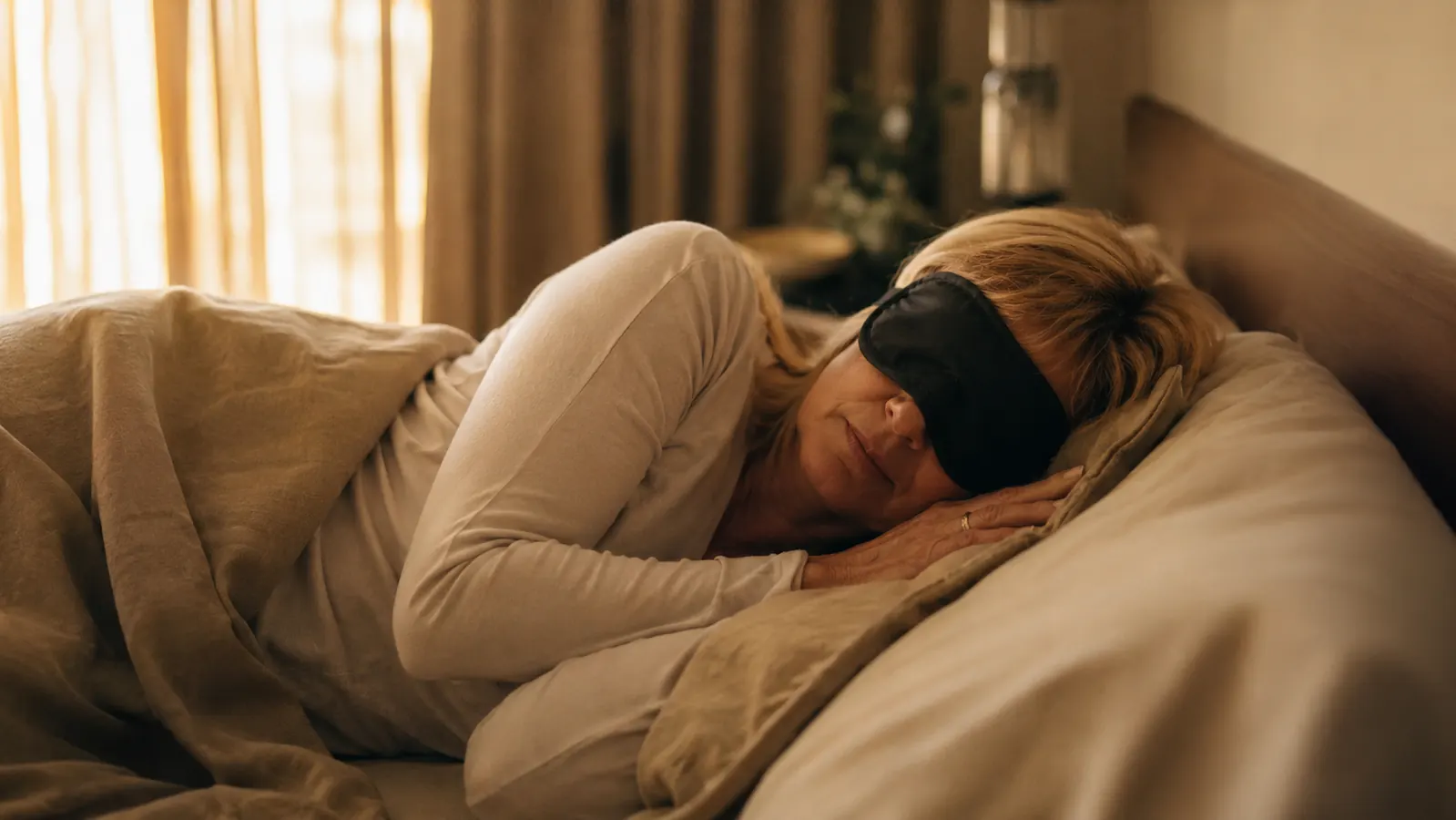
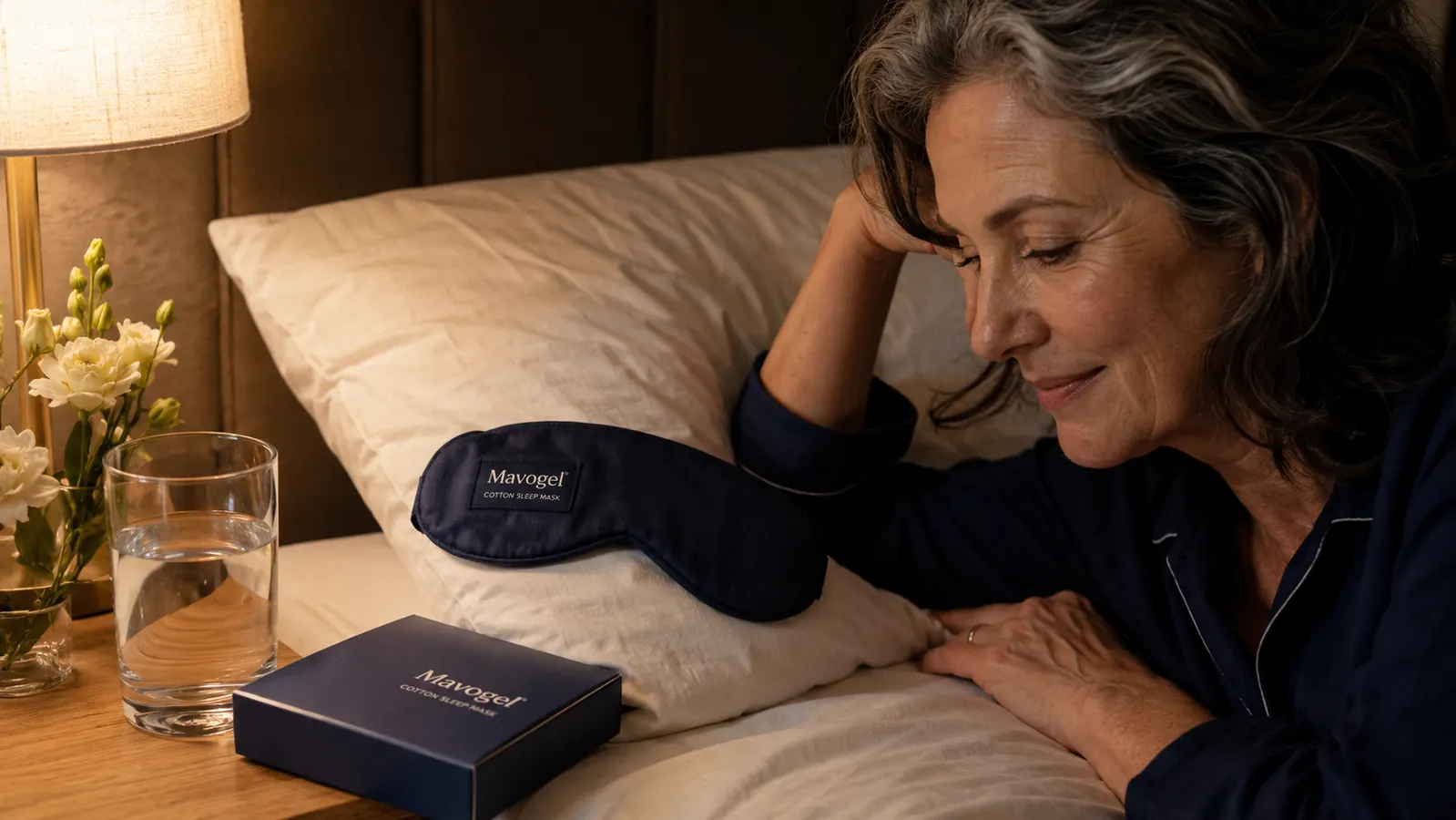
My bedroom faces east. I live in a neighborhood where the streetlight is close enough to read by if I forget to close the blinds all the way. For most of my life I just told myself I was a light sleeper and accepted the 5:15 a.m. wake-up as my lot. Then, three years ago, my daughter handed me a cotton sleep mask after I complained about it one too many times at Easter dinner. I tried three or four before I landed on the Mavogel Cotton Sleep Mask, and I have been wearing one almost every night since February. After four months of daily use, including two trips and six weeks of covering evening shifts for a neighbor's small business, I can tell you exactly what works, what does not, and who this mask is actually built for.
The Mavogel has more than 94,000 reviews on Amazon. That number made me skeptical. High review counts can mean the product has been sold aggressively to boost rankings, not that it earned them. So I tracked my experience deliberately: I noted the first few nights, checked back at six weeks, and then re-evaluated after four full months. The mask is not perfect, but for what it costs and what it does, the crowd is largely right.
The Quick Verdict
A well-built, genuinely light-blocking cotton mask that holds up over months of nightly use. The adjustable strap and nose-bridge wing are real design wins. Side sleepers with narrower faces may find a small gap at the nose, but for most adults this is the easiest sleep upgrade at a budget price point.
Amazon Check Today's Price →Still waking up before you're ready? The Mavogel mask blocks the light your blackout curtains miss.
Rated 4.5 stars by more than 94,000 buyers. Ships fast and costs less than a coffee. If it does not work for you, the return is free.
Amazon Check Today's Price on Amazon →How I've Used It Over Four Months
I am 58. I live alone since my youngest moved out two years ago, which means I finally control the bedroom environment, but I cannot control the east-facing window or the streetlight. My nightly routine is predictable: lights out around 10:30 p.m., mask on immediately, audiobook for about 20 minutes, then sleep. On shift-work nights I was trying to fall asleep at 7:30 p.m. in full evening daylight, which is a different challenge entirely.
I also wore the mask on two trips during this period: a direct flight from Orlando to Seattle in April and a long weekend at my sister's house in June, where her guest room has a large south-facing window and no curtains at all (she is a morning person; I am not). Those travel conditions gave me a more honest read on how the mask handles real-world light situations versus a bedroom I can partially control.
Over those four months I hand-washed the mask 11 times, which is my real measure of durability. I have had masks that survived two washes before the strap started to lose its grip or the fabric puckered. The Mavogel has not done either.
The Light-Blocking Design: What Mavogel Does Differently
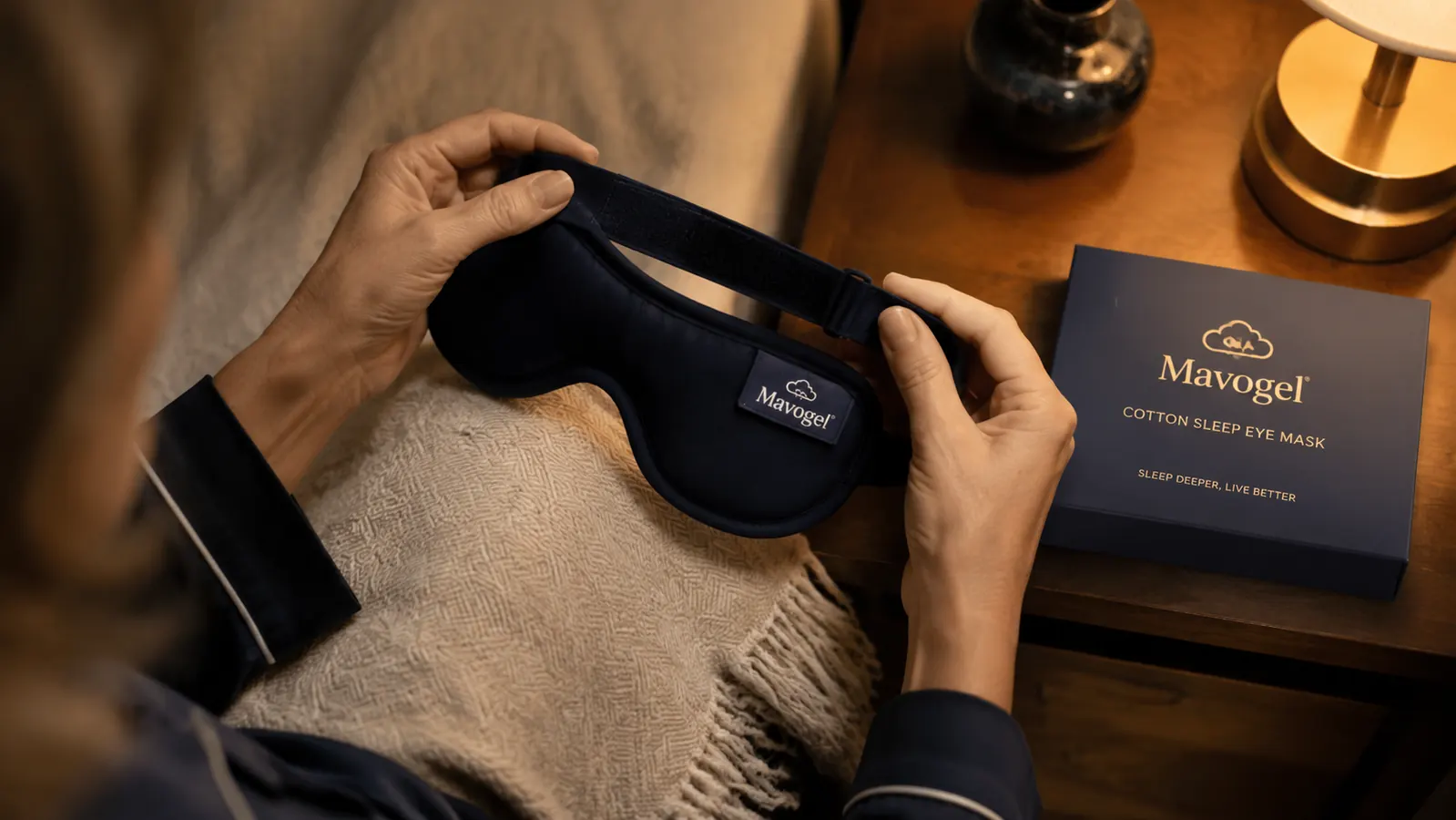
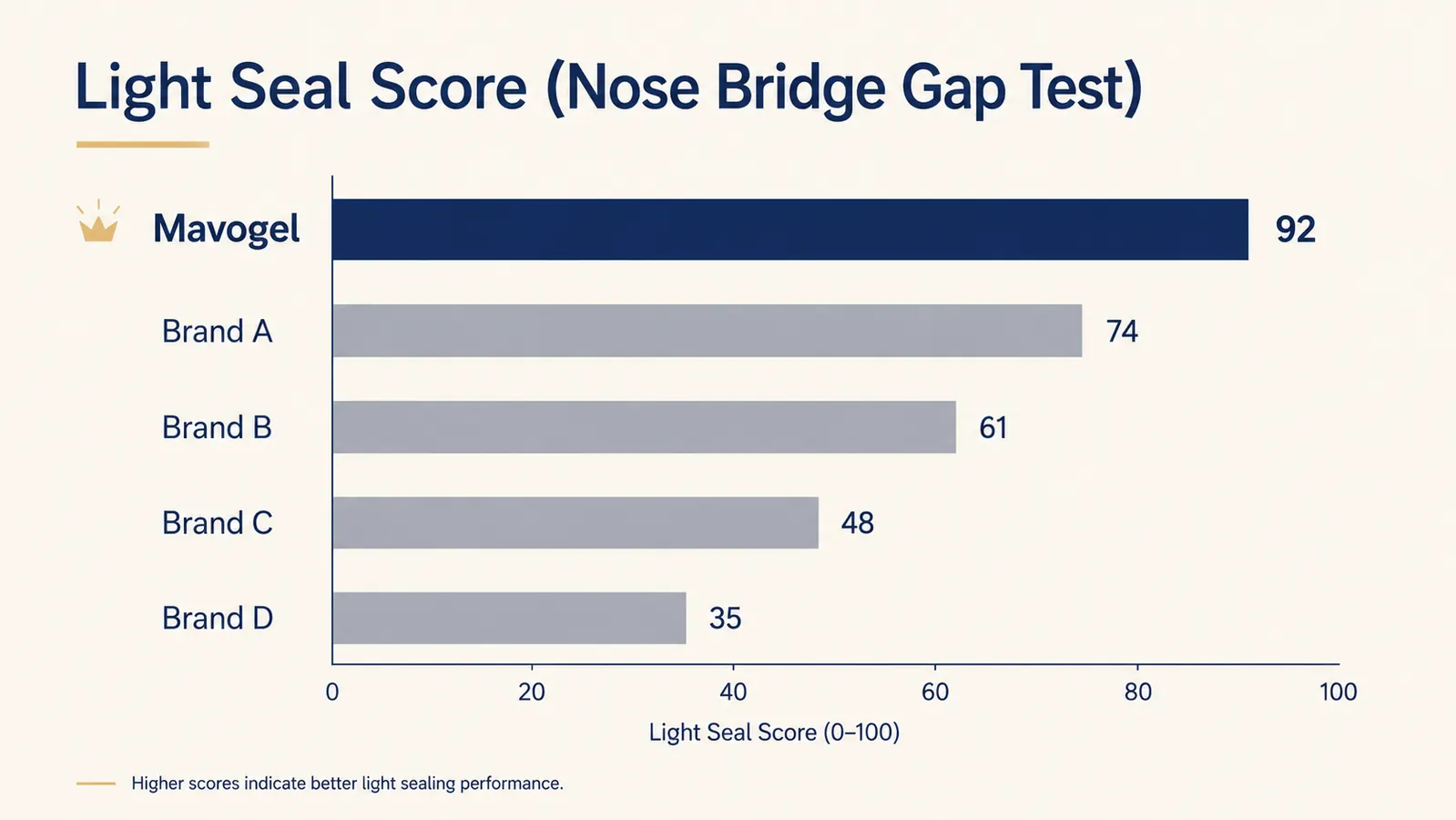
Most cheap sleep masks are just two ovals of fabric sewn to an elastic band. They block light directly in front of your eyes, but the moment you roll over or sink into a pillow, the sides gap open and light floods in from the bottom or the nose bridge. The Mavogel has a different shape: the front panel has a slight downward curve with a nose-wing that drapes over the bridge of your nose and the inner corners of your eyes. That wing is the key design detail, and it is the reason this mask beats competitors at half the price.
During my first week I did what I call the 'lamp test': I sat up in bed with the mask on, turned on my 800-lumen bedside lamp, and looked for any light bleed. With most masks I have tried, I can see the lamp glow through the nose gap immediately. With the Mavogel, I had to tilt my head and really look for it before any light registered. The seal is not absolute, especially for narrower faces. My sister, who has a narrower nose bridge than I do, reported a faint glow at the inner corners. But for my face shape, the seal was excellent.
The mask also sits slightly off the eyelids rather than pressing against them. The molded front pads create a small cup shape, so your lashes are not brushing cotton all night. If you have ever woken up with your lashes bent or your eyes feeling irritated, that eye-cup shape is the fix. I did not fully appreciate it until I ran out of the Mavogel for one week while it was in the wash and used an old flat mask. I noticed the difference on night one.
Comfort Over a Full Night: Temperature, Pressure, and the Strap
I run warm at night. That started about three years ago with perimenopause, and it has not fully resolved. A mask that traps heat against my face is a mask I pull off at 2 a.m. and toss across the bed. The Mavogel is 100% cotton, which breathes noticeably better than the satin or polyester masks I tried before it. I still feel some warmth at my nose during summer nights, but not enough to wake me. In April and May, when my bedroom hovered around 68 degrees, I never once pulled it off in my sleep.
The strap adjustment is the other comfort factor that matters. The Mavogel uses a simple velcro slider rather than the fixed-size elastic most masks use. I can tighten it enough to stay in place when I roll from side to back, and loosen it enough that there is no pressure mark on my temples in the morning. That sounds like a small detail, but I have gotten headaches from over-tight elastic more than once. My neighbor Donna, who tried the mask after borrowing mine for a red-eye flight, said the strap was the first thing she noticed because her head is smaller than average and most masks slip off her overnight.
I have gotten headaches from over-tight elastic more than once. The Mavogel adjustable strap fixed that problem on the first night, and it has not come back in four months.
Side sleepers have one extra concern: pressure on the ear. When I am on my right side, the velcro tab sits just above my ear and can create a minor pressure point if the strap slips down. It happened twice over four months. Repositioning the strap slightly higher solved it both times. It is worth mentioning because side sleepers with sensitive ears will want to spend a minute getting the strap placement right the first few nights.
How It Held Up: Four Months of Washing and Wearing
I wash my mask every few weeks by hand with a small amount of mild soap. The cotton has not pilled or stiffened. The velcro on the strap still grips the same as it did new, which matters because velcro loses its hold over time as fibers fill the hooks. After 11 hand washes, I would estimate the grip is at about 90% of what it was new. That is better than I expected. I have two Mavogel masks now and I rotate them, which probably extends the life of both, but even just the one mask I started with in February looks like it has months of use left.
The stitching on the nose bridge wing has held without fraying. The fabric has not developed any thin spots from friction. My previous favorite mask, a polyester contoured mask I bought from a different brand, developed a worn patch at the nose bridge after about three months. The cotton construction here seems to handle repeated contact with skin oils better than synthetic fabrics do in my experience.
Travel: Two Trips, One Flight, One Bright Guest Room
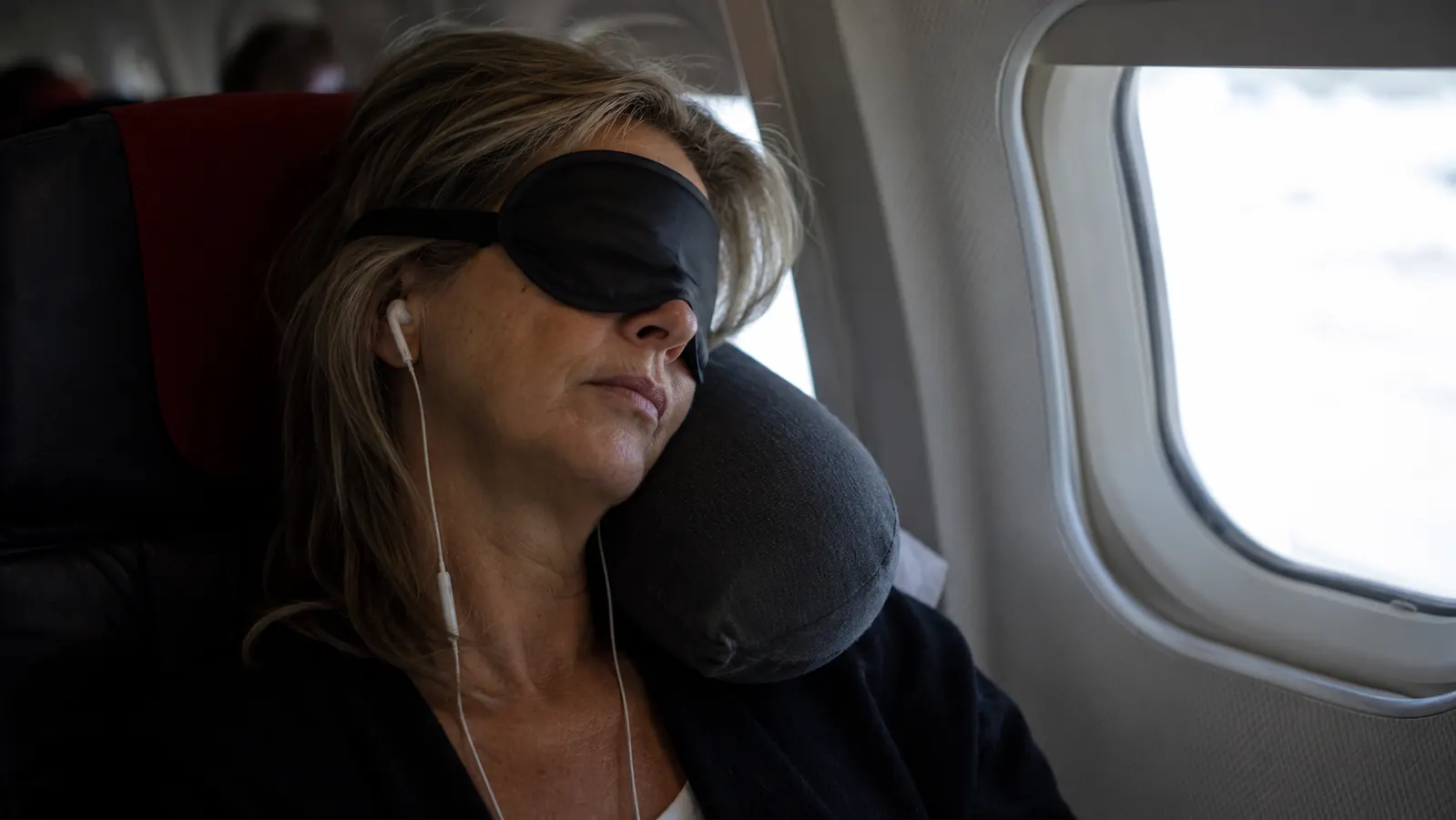
On the April flight to Seattle, I wore the Mavogel from boarding to descent, about five hours. The plane had working window shades, but the person two rows ahead of me kept hers open the whole flight. Without the mask, that angled sun would have hit me directly. With it on, I slept for almost three of the five hours, which is a record for me on a plane. The mask compressed into almost nothing in my carry-on pocket, smaller than my phone.
My sister's guest room was the real stress test. No curtains, full southern exposure, and she is up at 6 a.m. making coffee with every light in the kitchen on. I wore the mask every night of that four-day visit and slept until 7:30 a.m. each morning, which is genuinely unusual for me in an unfamiliar room. The mask did not slip off during sleep on any of those nights, even on the nights I moved around more than usual on the unfamiliar mattress.
What I Would Change
The nose-bridge coverage is very good for a face like mine, but I have a medium-width nose bridge and average face proportions. If you have a very narrow nose or prominent brow bones, you may see more light leak at the inner eye corners than I did. The mask is not adjustable in that dimension. A carry pouch would also be welcome for travel. The mask is thin enough to fold and tuck anywhere, but a small branded pouch keeps it clean and makes it easier to find in a bag.
I also notice that the mask gets slightly warm during the first 20 minutes of wear in a warm room. Not uncomfortable, but noticeable. If you sleep with a fan, that probably solves it. If you sleep hot and do not use a fan, you may feel some warmth building at the nose bridge before you drift off. It has never been enough to wake me, but I want to be honest about it.
What I Liked
- Nose-bridge wing significantly reduces light leak compared to flat masks
- Eye cups keep the fabric off your lashes all night
- Adjustable velcro strap fits heads of different sizes without pressure marks
- 100% cotton breathes better than satin or polyester options at similar prices
- Holds up through repeated hand-washing with minimal strap degradation
- Compresses to almost nothing for travel packing
- Inexpensive enough to keep a backup without guilt
Where It Falls Short
- Narrower nose bridges may see some light gap at inner eye corners
- Velcro tab can press on ear for side sleepers if strap is positioned too low
- Feels slightly warm at the nose in rooms above 72 degrees before you fall asleep
- No carry pouch included
- Velcro grip is noticeably softer after around 10 washes
How the Mavogel Compares to What I Tried Before
Before landing on the Mavogel I went through four masks over about eighteen months. One was a satin eye mask from a drugstore that felt soft but had no real light blocking. One was a 3D contoured mask with rigid plastic cups that left marks on my face by morning and slid off overnight. One was a silk mask that cost more than the Mavogel and was beautiful but let in more light because the nose fit was worse. The fourth was a polyester knock-off of the Mavogel style that looked similar but the strap had no velcro adjustment, just a fixed loop that was too tight on my head. The Mavogel sits above all of them on every dimension that actually matters for sleep: light blocking, comfort over a full night, and durability. If you want a deeper breakdown of how the cotton design stacks up against silk materials, I covered that comparison separately in cotton vs silk sleep mask.
Who This Is For
This mask is built for adults who need real, reliable light blocking and want something that will last more than a month. It is especially good for morning people who want to sleep later, shift workers who sleep in daylight, travelers who cannot control hotel or guest-room light, and anyone whose partner reads in bed after they want to sleep. If you run warm at night, cotton is the right material choice over satin. If you travel frequently and need something that fits in a pocket, the Mavogel is one of the easiest recommendations I make. You can learn more about using a mask effectively in different light conditions at my guide to falling asleep in any light condition.
Who Should Skip It
If you have a very narrow nose bridge and light bleed is a known problem for you with other contoured masks, you may want to test the Mavogel with a liberal return window in mind. It is not a guaranteed seal for every face shape. People who sleep exclusively on their back with a very firm pillow and minimal movement may also find that a 3D hard-shell mask gives more consistent eye clearance than the soft cups here, though you give up packability and breathability in trade. Finally, if you want something that feels genuinely luxurious against your skin over a long time, a higher-end silk mask may be worth the cost. I looked at that trade-off in more detail in the 10 reasons a blackout sleep mask helps you fall asleep faster piece, which walks through the science of why total darkness matters regardless of which mask you pick.
Four months in, this is still the mask on my nightstand every single night.
The Mavogel Cotton Sleep Mask is the most-reviewed blackout mask on Amazon for good reason. If your bedroom has any light at all, it is a low-cost, low-risk fix worth trying tonight.
Amazon Check Today's Price on Amazon →